Tooth pain rarely picks a convenient moment. It shows up on a Saturday morning, in the middle of a workday, or right as you sit down to a meal you were looking forward to. For adults around Great Neck and the rest of Long Island, one of the more common reasons behind stubborn dental pain is an infection deep inside a tooth, the kind that often calls for root canal treatment.
The tricky part is that the warning signs are not always dramatic. Some people have a constant throb. Others feel almost nothing until a dentist spots the problem on an X-ray during a routine visit. Knowing what to watch for helps you decide when to call an office instead of waiting for things to get worse.
Why Root Canal Symptoms Are Easy to Overlook
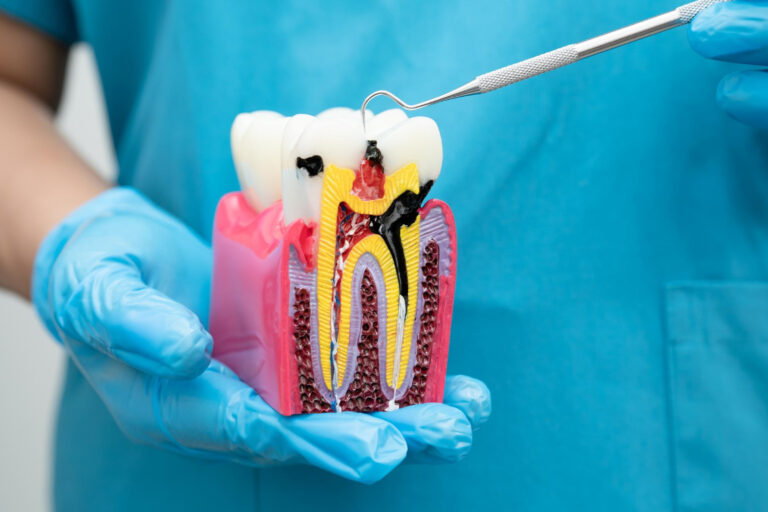
A root canal becomes necessary when the pulp, the soft tissue inside the tooth that contains nerves and blood vessels, becomes infected or dies. Infection of the pulp can lead to a painful toothache, gum swelling or tenderness, sensitivity to temperature changes, and tooth discoloration.
What makes this confusing is how inconsistent the experience can be. One person feels a sharp jolt with every sip of hot coffee. Another notices a dull ache that drifts in and out for weeks. A third feels nothing at all. Because a badly infected pulp cannot heal itself, symptoms tend to return and build rather than settle down on their own. A tooth that quiets for a few days and then flares up again is often telling you something is still wrong underneath.
Root Canal Symptoms at a Glance
Dental symptoms tied to pulp trouble overlap with a lot of other conditions, so dentists look at patterns rather than a single complaint. The table below shows the signs most often linked to an infected or dying tooth.
| What you notice | Why it can point to pulp trouble |
|---|---|
| Severe or lingering tooth pain | Often the most common symptom, particularly when it persists or throbs |
| Sensitivity to hot and cold | A frequent signal that the pulp is irritated or inflamed |
| Pain when biting or chewing | Pressure on an infected tooth can trigger sharp discomfort |
| Swollen or tender gums | Gum swelling and tenderness commonly accompany infection |
| An abscess or pimple on the gums | A small bump may indicate infection draining from the tooth |
| Tooth discoloration | A tooth that darkens may have a damaged or dying pulp |
| Bad taste, loose teeth, facial or jaw discomfort | These can appear alongside an infected tooth and spread beyond it |
The Most Common Warning Signs, Explained
A single symptom on its own does not prove you need a root canal. Taken together, though, the following signs give a dentist a strong reason to take a closer look and often an X-ray.
Severe or Lingering Tooth Pain
The most common symptom is a persistent, throbbing toothache, especially one that hangs on after the trigger is gone or flares when you bite down. Pain that wakes you at night or radiates through the jaw deserves attention. If the pain fades and then returns stronger than before, that pattern matters too. Many people describe this stage as the point where over-the-counter remedies stop helping for long.
Sensitivity to Hot and Cold
Sharp sensitivity to hot and cold foods or drinks is one of the classic reasons patients call an endodontic office. A brief twinge from ice cream is common and often harmless. Sensitivity that lingers for minutes after the temperature is gone, or that shows up with heat rather than cold, is more concerning. Heat sensitivity in particular can suggest the pulp is badly inflamed.
Pain When Biting or Chewing
Pain on biting is another frequently reported symptom. You might notice it first with hard foods, then find that even soft bread causes a dull ache. The pressure of chewing can irritate an infected tooth and the tissue around it. Some people describe it as a feeling that the tooth is sitting too high in the bite, even when nothing has changed.
Swollen or Tender Gums, Abscesses, and Bumps
Gum swelling and tenderness often show up with pulp infection. So does an abscess, which can look like a pimple on the gums. That small bump may come and go, and it sometimes drains, leaving a bad taste in the mouth. Swelling around a tooth is a sign that infection is active, and it should be evaluated rather than watched at home. In some cases the swelling can extend beyond the gum line.
Tooth Discoloration
A single tooth that turns gray, yellow, or darker than its neighbors may have a pulp that is damaged or dying. Discoloration often develops gradually, so it can be easy to miss until you compare one tooth to another in a photo or mirror. This sign sometimes appears after dental trauma, even trauma that happened months or years earlier and seemed minor at the time.
Loose Teeth, Pressure, and Facial or Jaw Discomfort
Not every symptom stays inside the tooth. Loose teeth, a sense of pressure, facial pain, and jaw discomfort can all accompany an infected tooth. Sensitivity that spreads or shifts location is worth mentioning at your visit. Neck pain and brain fog, on the other hand, are not symptoms that this research identifies as typical root canal signs, so it is best not to assume a dental cause for them without an evaluation.
Sometimes There Are No Symptoms at All
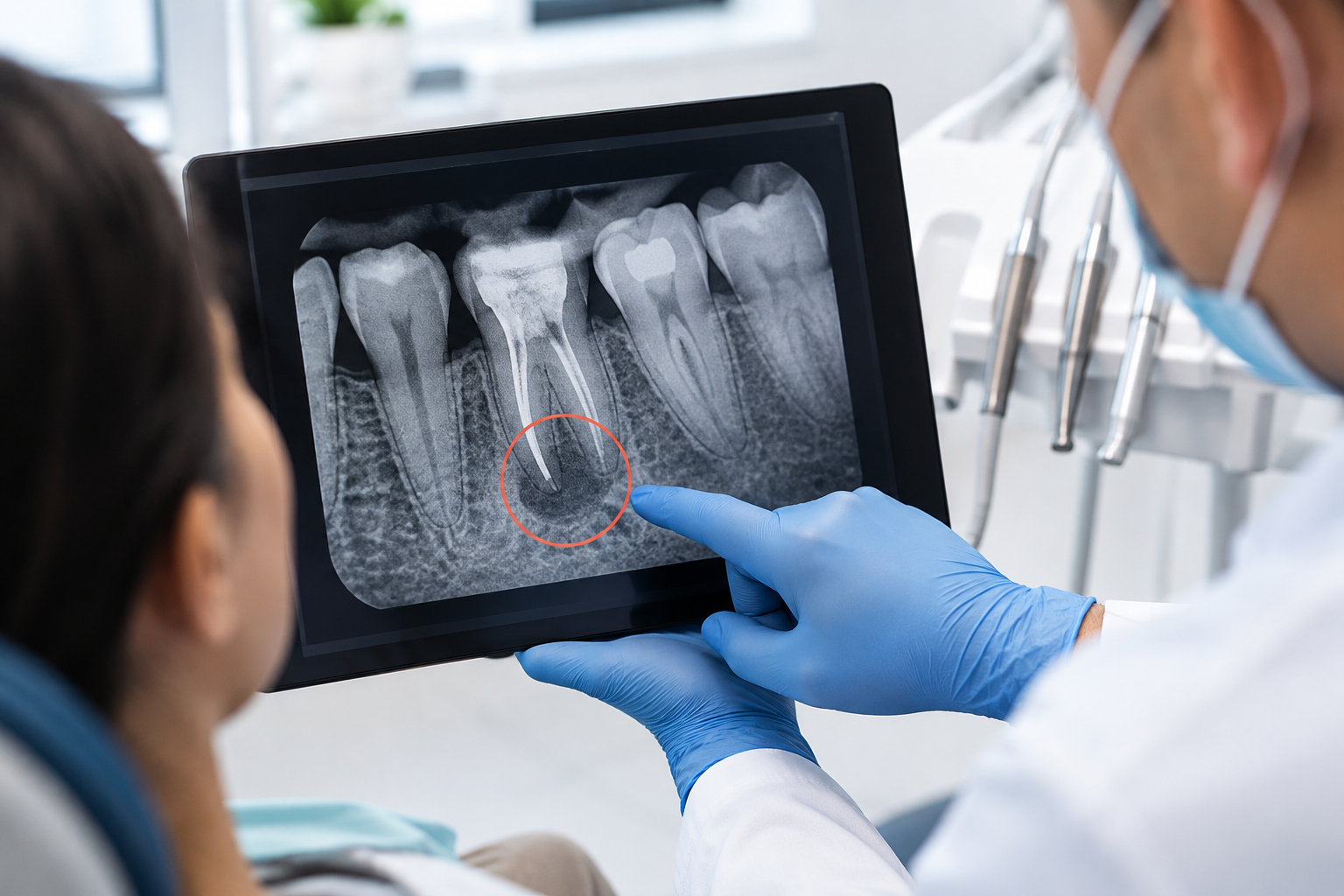
One of the most important things to understand is that a tooth can need a root canal without causing any pain. Common symptoms include pain on biting and sensitivity to hot and cold, and sometimes there is no sensitivity whatsoever. An abscess or pimple on the gums may be the only visible clue.
That is one reason regular dental exams matter. A dentist checking a tooth that feels fine can still find signs of trouble on an X-ray or during a visual exam. Waiting for pain to become unbearable usually means the infection has had more time to develop.
What Happens During a Root Canal
A root canal treatment involves cleaning out the dead or dying nerve inside a tooth, along with any cavity or damage to that tooth. The goal is to save the natural tooth rather than remove it. Modern techniques and digital imaging have made the procedure far more comfortable than its reputation suggests, and the focus is on a gentle, controlled experience from start to finish.
If you have been told you need a root canal, it helps to ask what the dentist saw, whether the tooth can be saved, and what the alternatives are. Getting those answers early makes the decision much easier to handle.
What to Expect After Treatment
Immediately after a root canal, you might experience some continuing numbness or discomfort. This is completely normal and typically disappears within a matter of days. Mild tenderness when chewing can also happen while the area settles. If you notice swelling that grows, pain that gets worse instead of better, or a reaction that worries you, call the office rather than waiting it out.
When to Contact a Dentist in Great Neck
If you are dealing with tooth pain, swelling, sensitivity, or a recent injury to a tooth, the safest step is to schedule an evaluation rather than self-diagnose. Call our office and describe what you are feeling, when it started, and whether anything makes it better or worse. That information helps your dentist decide how quickly you need to be seen.
Bring up anything that seems unrelated, too, such as a bad taste in your mouth, a bump on the gums, or a tooth that feels different than it used to. Small details often point to the right diagnosis faster than a description of pain alone.
Frequently Asked Questions
What are the first signs of a root canal?
Early signs often include sensitivity to hot or cold, a dull ache that comes and goes, and mild pain when biting. Some people notice an abscess or pimple on the gums first, or a tooth that looks darker than the others. In many cases there are no early symptoms at all, which is why routine exams and X-rays matter.
Can a root canal cause neck pain?
The research reviewed here does not list neck pain as a typical root canal symptom. Dental symptoms more commonly linked to an infected tooth include facial pain and jaw discomfort, along with tooth pain triggered by hot, cold, or chewing. Neck pain has many possible causes, so it should be evaluated by the appropriate medical professional rather than assumed to be dental.
What can be mistaken for root canal pain?
Several conditions can feel similar, since sensitivity to hot and cold, pain on biting, and gum tenderness are not unique to pulp infection. Sinus pressure, gum disease, a cracked tooth, or bite problems can all create comparable discomfort. Only an examination and imaging can confirm what is actually causing your symptoms, so guessing rarely saves time.
Is brain fog a common symptom after a root canal?
It is not described as a common symptom in the material reviewed here. What is expected after a root canal is some continuing numbness or discomfort that is completely normal and typically disappears within a matter of days. If you experience anything unusual or persistent after treatment, contact your dental office so they can assess it.
How long does discomfort last after a root canal?
Some numbness or discomfort right after the procedure is normal and generally fades within a few days. Mild tenderness while chewing can linger a bit longer as the tooth and surrounding tissue calm down. Pain that increases, swelling that grows, or symptoms that continue well beyond the expected window should be reported to your dentist.
Don’t Ignore the Signs of a Root Canal
Persistent tooth pain, sensitivity, swelling, pain when biting, or changes in tooth color can signal a problem that needs professional attention. Even without noticeable pain, an infected tooth may still require treatment. If you are experiencing any of these symptoms, do not wait for them to become more severe. Contact North Shore Cosmetic and Implant Dentistry today to schedule an evaluation in Great Neck, NY. Our dental team can assess your symptoms, explain your options, and help determine the right next step for protecting your natural tooth.