Few dental phrases carry as much baggage as “root canal.” Patients in Great Neck often arrive already braced for the worst, sometimes postponing treatment for months because of a story they heard years ago. That reputation deserves a closer look, because the modern version of the procedure looks very different from the one people describe in waiting room horror stories.
The short answer is that root canal treatment is usually not painful. The longer answer covers what you may feel during the appointment, why your jaw might ache afterward, and why the pain you are already in is the part worth paying attention to.
Where the Reputation Comes From
The fear is understandable. Decades ago, the experience of needing deep dental work was genuinely unpleasant, and the memory of that discomfort stuck in the culture. It became shorthand for the worst thing that can happen in a dentist’s chair.
What has not kept up with that reputation is the treatment itself. Modern root canal treatment is designed to relieve pain, not cause it. The familiar myth, that a root canal is painful, has been overtaken by the reality that patients are often far more comfortable during the procedure than they were in the days leading up to it. Many people describe the experience as no more uncomfortable than having a filling placed.
What a Root Canal Actually Treats
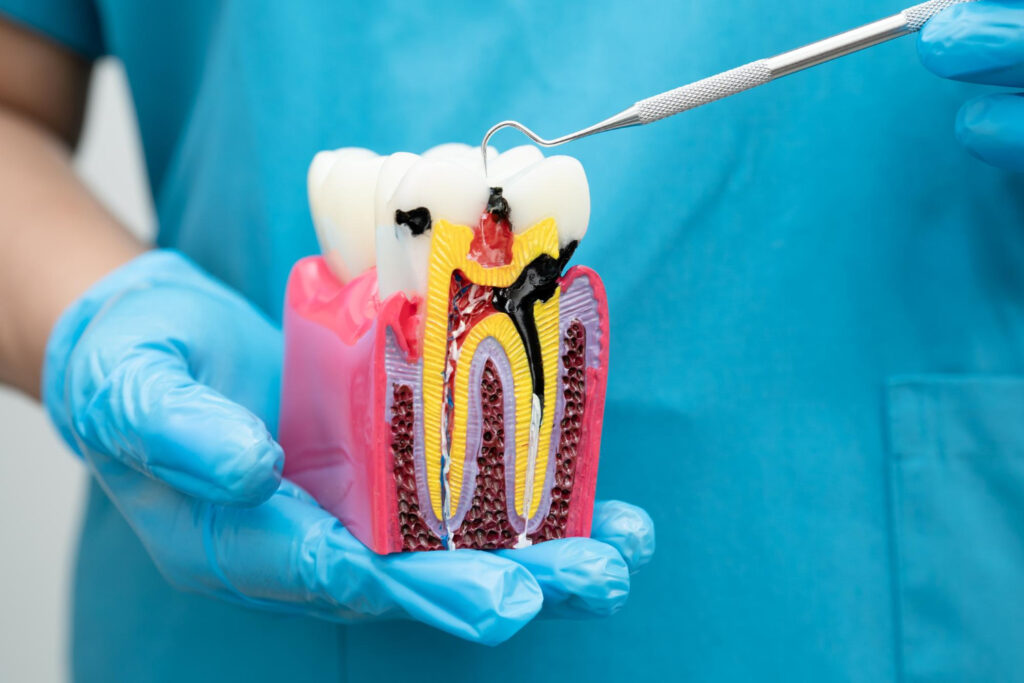
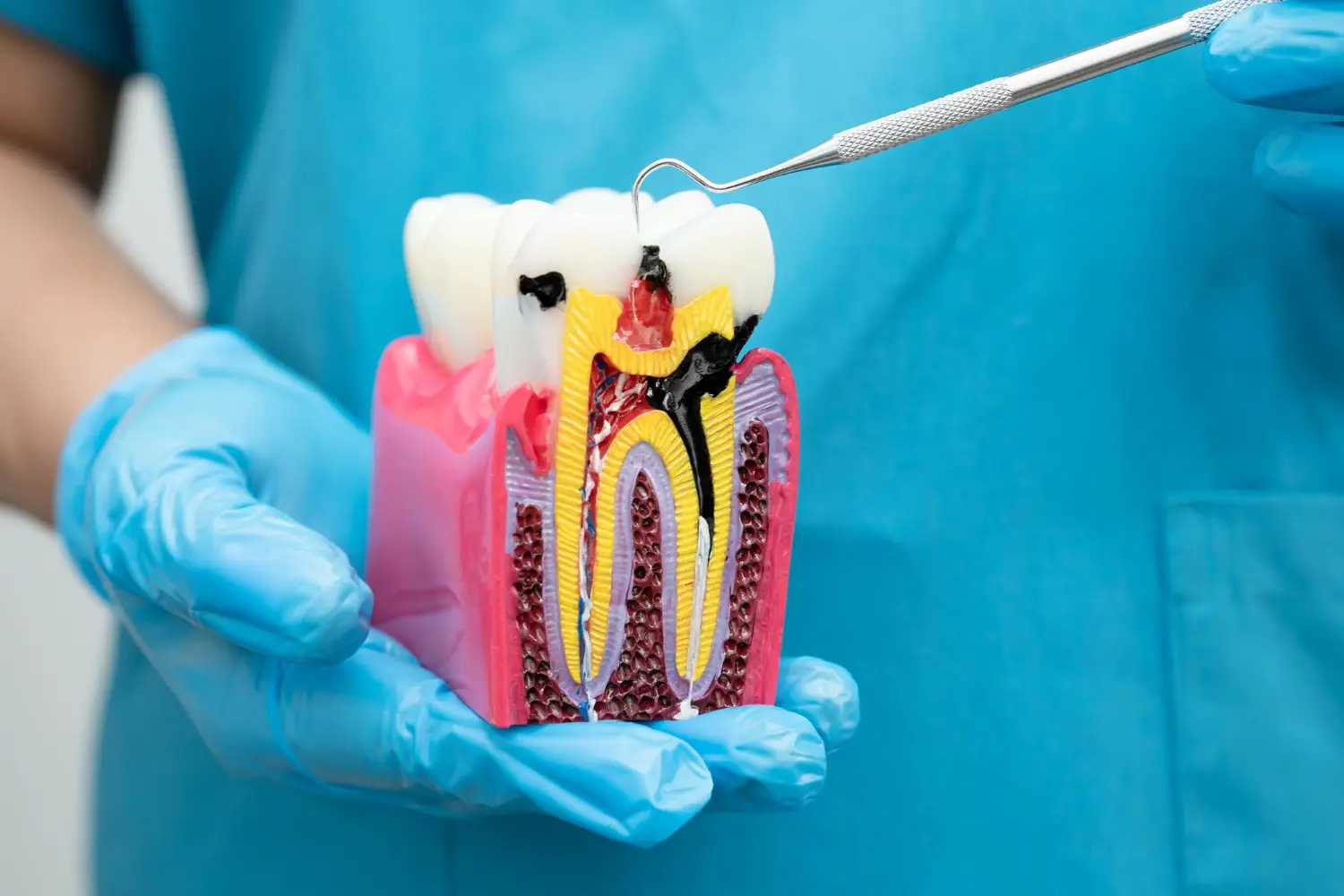
A root canal is the natural cavity at the core of a tooth. Inside that space sits the pulp chamber, a soft area of nerves and tissue. When bacteria reach the pulp, whether through a deep cavity, a crack, or an older restoration that has failed, the tissue inside becomes inflamed or infected. That is what produces the pain people notice.
Root canal treatment removes the infected tissue from inside the tooth, cleans and seals the space, and leaves the outer structure in place. The goal is to stop the source of the pain rather than mask it. In that sense, the procedure is the treatment for tooth pain, not the cause of it.
The role of local anesthesia
With the use of local anesthesia, root canal treatment should not be painful. Anesthetic numbs the space being treated, which is the single biggest reason the experience has changed so much over the years. Your dentist will confirm the area is properly numb before beginning, and if you feel anything unexpected partway through, you can raise a hand and have more anesthetic delivered.
What You May Feel During the Appointment
Most patients report that the procedure itself is virtually painless. What they do notice tends to be unrelated to the tooth:
- Pressure or a sense of movement as the dentist works
- A feeling of fullness in the mouth from instruments and materials
- Jaw fatigue from holding the mouth open for an extended period
- Neck soreness from staying in the same position in the chair
One patient described it plainly: never feeling a thing during the treatment, but ending up with a sore neck from the position and a tired jaw from keeping the mouth open so long. That account matches what most people experience. The discomfort, when it shows up, is usually muscular rather than dental.
Discomfort After Treatment: What to Expect
Some soreness afterward is normal and does not mean anything went wrong. After endodontic treatment, patients may experience pain, swelling, and increased sensitivity in the treated area for one to two days. Anti-inflammatory medication is commonly part of the recovery plan, along with taking it easy on the tooth.
This window is short, and it is different in character from the pain that brought you in. The pre-treatment pain of an infected tooth tends to throb, spread, and interrupt sleep. Post-treatment soreness is usually milder and eases steadily. If you are unsure whether what you are feeling is normal, call your dentist rather than waiting it out.

Signs You Might Need a Root Canal in the First Place
Understanding the symptoms helps explain why treating the tooth is a relief rather than a punishment. Warning signs include:
- A persistent toothache that does not resolve on its own
- Pain that spreads to other areas, including the face and neck
- Pain that arrives in waves or stays constant
- Sensitivity to hot or cold that lingers after the stimulus is gone
- Swelling in the gums, face, or neck
- Throbbing pain that becomes difficult to manage
Not every tooth that needs treatment hurts. Sometimes the nerve has already died and the tooth feels quiet, even as infection continues underneath. That is one reason regular dental exams matter: an examination can catch a problem before it announces itself.
Why Waiting Usually Makes It Worse
Because pain is the body’s alarm, ignoring it rarely works out. Untreated infection does not stay put. Over time, the pain can spread to other areas such as the face and neck, and swelling can develop in the face, neck, or gums. Further along, the infection can lead to bone loss around the tooth.
There is also a practical cost to delay. A tooth that could have been saved with root canal treatment may eventually be past saving, which shifts the conversation toward extraction and replacement. Addressing the problem early keeps more options on the table.
How a Comfort-Focused Practice Approaches Treatment
Technique matters, but so does the environment. At North Shore Cosmetic and Implant Dentistry in Great Neck, care is built around patient comfort, with clear explanations before anything begins and a pace that lets you ask questions along the way. For nervous patients, that means knowing what to expect at each step rather than guessing.
Practical steps that make a difference include:
- Telling your dentist about dental anxiety before the appointment, not during it
- Asking how the area will be numbed and how numbness will be checked
- Agreeing on a signal, such as a raised hand, to pause at any point
- Asking what to expect in the one to two days after treatment
- Confirming which medication, if any, is appropriate for soreness
Patients who voice their concerns ahead of time consistently have an easier visit. There is no prize for enduring treatment silently.
Is a Root Canal One of the Worst Dental Experiences?
That framing is what most needs updating. A root canal is a routine procedure performed to eliminate infection and stop pain. The procedure itself is typically virtually painless thanks to local anesthesia, and any soreness afterward is generally short-lived and manageable.
Compare that with the alternative. An untreated infected tooth produces throbbing pain that can become unbearable, swelling that can extend into the face and neck, and damage to the bone that supports the tooth. Set against that, a numb appointment and a day or two of mild tenderness is the easier path by a wide margin.
The most useful thing you can do as a Great Neck patient is to treat the fear as a separate question from the procedure. Ask your dentist what your specific tooth needs, how comfort will be managed, and what recovery looks like. Once those details are on the table, the words root canal tend to lose most of their power.
Frequently Asked Questions
Is a root canal more painful than getting a filling?
For most patients, no. Root canal treatment is often no more uncomfortable than having a filling placed, largely because both rely on local anesthesia to numb the area first. The sensations people describe are usually pressure, jaw tiredness, and neck stiffness from holding a position rather than actual tooth pain. If you have tolerated a filling comfortably, expect something similar.
How long does soreness last after a root canal?
After endodontic treatment, patients may experience pain, swelling, and increased sensitivity in the treated area for one to two days. Anti-inflammatory medication is commonly part of the recovery plan and helps keep that window manageable. Soreness that worsens instead of improving, or swelling that grows, is a reason to contact your dentist promptly rather than wait for it to settle on its own.
Will I feel anything at all during the procedure?
With the use of local anesthesia, the treated area is numbed, so pain should not be part of the experience. Many patients feel pressure, movement, and the physical effort of keeping the mouth open. If anything registers as sharp or uncomfortable, tell your dentist immediately. Additional anesthetic can be given, and there is no reason to push through.
Can a root canal actually relieve my tooth pain?
Yes. Root canals do not cause pain, they relieve it. The procedure removes infected tissue from inside the tooth, which is the source of the throbbing, the hot and cold sensitivity, and the pain that can spread to the face and neck. The discomfort you feel before treatment is the problem, and the treatment is the solution.
What happens if I delay treatment?
Infection does not resolve on its own. Over time, the pain can spread to areas such as the face and neck, swelling can develop in the face, neck, or gums, and the infection can eventually cause bone loss. A tooth that might have been saved with timely treatment can become unsalvageable, so scheduling an evaluation early keeps more options available.